


 Buying Guide for Baseballs
Find the right baseball for your program with this quick guide outlining key differences in cover materials, construction, and league requirements.
Need additional help? Call 800-688-6709 to speak with a sales expert who can quickly recommend the best option for your program.
Cover Types:
-
Full-Grain Leather
o Premium leather that holds its texture and grip longer, even with extended game use and repeated impact.
o Best for high school, college, and professional games.
-
Genuine Leather
o Real leather at a lower cost. May show wear faster than full grain, but still provides a traditional feel and performance.
o Best for middle school, high school (practice/budget friendly), and recreational leagues.
-
Synthetic Leather/Composite Cover
o Less expensive than real leather, but not as long-lasting.
o Provides a similar grip to a leather baseball.
o Resistant to absorbing moisture.
o Best for tee-ball, youth leagues, and middle school/high school practice (budget-friendly).
Stitching:
-
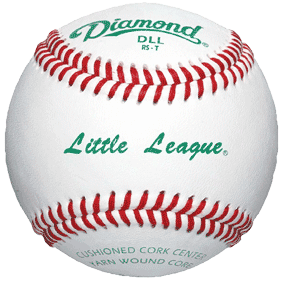
Raised Seam
o Higher seams improve grip and spin but create more air resistance, which can reduce speed.
-
Regular Seam
o Lower seams create less air resistance, resulting in a faster flight, but can make it tougher for pitchers to generate higher spin.
Core:
-
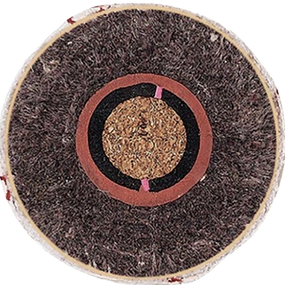
Cushioned Cork
o Includes cork center surrounded by rubber cushioning layers that help maintain shape, compression, and performance over the longest period of play. Widely accepted as the best quality ball.
o Generally considered livelier due to the cushioned cork and tighter wool windings.
o The best ball for all levels of play (professional, college, high school, middle school, youth leagues) where the most consistent, longest-lasting high performance is desired.
-
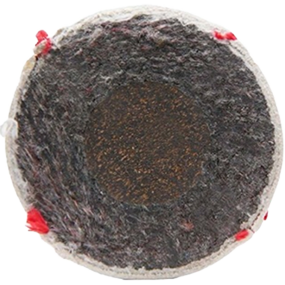
Cork & Rubber Pill
o Cork and rubber center holds its shape through extended use.
o Less lively than balls with a cushioned center.
o A budget-friendly option for programs that want a regulation ball with good performance over time.
-
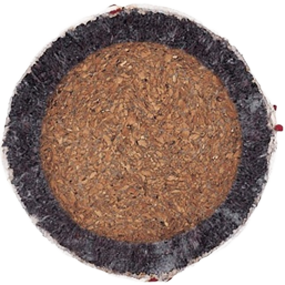
Cork
o Solid cork center with a thinner layer of wool windings.
o Has a lighter feel and lower compression compared to higher-level balls.
o Can lose shape over time with repeated hard contact.
o Best for practice, lighter use, youth leagues, and recreational play.
-
Foam Soft Core - Safety balls that build confidence
o Tee Ball (Softest Core)
• Very soft core designed for low swing speeds.
• Best for introductory tee ball play.
o Level 1
• Low compression core that significantly reduces the risk of injury from impact.
• Best for coach-pitch and early youth leagues.
o Level 5
• Firmer than Level 1 but softer than a regulation baseball.
• Offers realistic performance while still offering impact reduction.
• Best for advanced youth leagues preparing players for regulation baseballs.
Association Stamps:
- Balls with association stamps (NFHS, Little League, Babe Ruth, etc.) are required for game play by those associations. These balls meet specifications for size, weight, and performance.
- Non-stamped balls may be used for practice and are usually less expensive.
- Official League Baseballs (OLB) - Matches league specifications but do not carry a specific association stamp. Commonly used for practice, scrimmages, and non-sanctioned games.
Tournament Baseballs:
-
Premium ball construction for most consistent, high-level performance
o Most tournament baseballs have full-grain leather and cushioned cork centers.
o Usually more expensive due to the ball construction.
-
“Tournament” is usually a labeling distinction
o Indicates the ball is approved for tournament play.
o Can also be used for regular season play.
- Always check the tournament rules before game day.